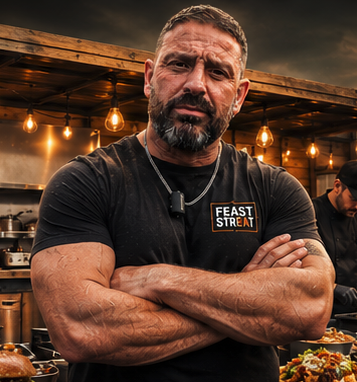
Catering a racecourse on a big race day means feeding thousands of people, fast, across a site where space is tight and the crowd moves in waves. We do it across all 16 of Arena Racing Company's racecourses, and the difference between a good food operation and a bad one is decided long before the gates open — on a site visit, weeks or sometimes even months ahead. Here's what actually goes into it.
Why we walk the site first
A week or two before a big meeting — say a Ladies' Day, a racecourse's biggest day of the year — I'll drive out and walk the site with the racecourse's team. Not because we haven't done it before, but because the details change every year, and a day this size lives or dies in the details.
Between us and the site lead, we remember the small problems from last year — a concession that was set up too wide and had to come down to one unit, a queue that ended up crossing the bar queue — and we fix them before they happen. Getting that right on the day is worth far more than the couple of hours it takes.
Getting the right brand in the right place
On a race day with around 10,000 people across the site, you can't just drop food anywhere. Every concession's position is a decision, and it comes down to three things: footfall, flow and service speed.
Footfall and flow are about putting food where the people actually are — near the grandstand, along the route to the parade ring, in every area the crowd naturally gathers — while working around the constraints of the site. You can't block a sightline of the track, for instance, so a long food court with signage has to go where it won't wall off the racing.
Service speed decides which brand goes where. Our staples — Greek food, burgers, loaded fries, hot dogs, fish and chips, mac and cheese — are what the masses love and, mostly, quick to serve. Something slower, like our pizza, goes into a smaller, contained space such as the VIP area rather than into the middle of a 10,000-strong crowd where the queue would build. And where one cuisine is really popular, we'll put two units on opposite sides of the site to split the crowd and keep both queues moving.
Managing queues so nobody waits
Quick, calm service is the whole game on a race day. A guest who waited too long remembers the wait, not the food. So a lot of the site visit is spent on queues.
We angle units so a food queue never crosses a bar queue — two lines feeding into each other is how a site grinds to a halt. Where a concession is going to get hammered, we look at whether there's room to add a small back-of-house kitchen behind it — even six metres by three makes a real difference to how fast the front line can serve. And if last year's wait times were fine, we don't over-build; part of a good site visit is knowing what not to change.
The VIP experience
Racecourses sell hospitality, so the VIP areas matter. On a typical Ladies' Day the VIP zone might hold around 200 people, and their food is often pre-sold as part of the package. We serve them in their own zone — usually with a slightly more premium line-up — and invoice the racecourse afterwards, so the guest experience is seamless and the commercial side is handled behind the scenes.
Our job is to make the racecourse money
This is the part people miss about racecourse catering: our job isn't just to feed the crowd, it's to generate revenue for the venue. A racecourse makes its money on food and drink, so the better and faster we serve, the more the day takes — for them as much as for us.
That's why we guide the brand mix. Working with the racecourse's managers, we'll suggest which of our concessions to put where — steering towards the lines that will take more money and that customers prefer, as long as they don't clash with anything the venue is already running itself. Higher revenue for the racecourse, higher revenue for us, a better choice for the guest. Everyone's in the same boat, and we all want the day to be as good as it can be.
Forecasting, and never running out
Behind all of this sits the least glamorous and most important part: forecasting. Our head of operations, Scott Fellows, builds the stock, staffing and logistics plan for every event, and his forecasting is genuinely exceptional — in one recent week he came in within about £500 of the actual figure on roughly £60,000 of sales across the group.
That accuracy lets us do something a lot of caterers can't: carry only around 25% overstock and roll it between events, rather than sending vast quantities of food to site and hauling most of it home. One of our racecourse clients told me plainly that he never wants us to run out of anything — so we forecast tightly enough to honour that without the waste, the tied-up cash and the transport of over-ordering.
Why the relationship matters
The last reason I go in person is simple: these are long-standing clients, and I like my relationships with them to be strong. I'll have spoken to a site lead on the phone plenty of times across the year, but there's no substitute for turning up, shaking their hand, walking their site and making sure they are happy with everything we're planning. Catering a racecourse well is a partnership, and partnerships are built face-to-face.
That's what's behind the food you see on a race day: not luck, but a site visit, a plan, and a team that has executed it countless times over our 21 years of operation.
ABOUT FEAST STREAT
Feast Streat is a UK turnkey street food catering company with its HQ in the West Midlands. We provide complete, single-supplier event catering: modular pop-up food courts built from our own trucks and hand-built timber concessions, serving 25 cuisines from 20+ in-house brands. We're fully self-sufficient (our own power and LPG), and we handle logistics, compliance, allergy management and waste in-house. We cater corporate events and brand activations, festivals and public shows, and stadia, arenas and racecourses across the UK — around 400 events a year.
Planning a race day, festival or corporate event?Get in touch — enquiries: bookings@feaststreat.co.uk.